+91-9811347199 saurabh.joshi@fanair.in
/// ESTD 2016

Dry/Wet Scrubbers

Scrubbers Manufacturers in India

Efficient Air Pollution Control Solutions

Dry/Wet Scrubbers are air pollution control systems designed to help remove harmful gases, fumes, and particulates from exhaust streams. They are used in commercial and industrial applications where cleaner exhaust air and managed emissions are crucial.

For companies looking for Dry/Wet Scrubbers Manufacturers in India, selecting the right scrubber depends on the type of pollutants, exhaust conditions, airflow, temperature, and required removal process. Dry and wet technologies use different methods, so the system needs to be selected according to the application.

Contact Us


Dry Scrubber Manufacturers in India

Dry Scrubber

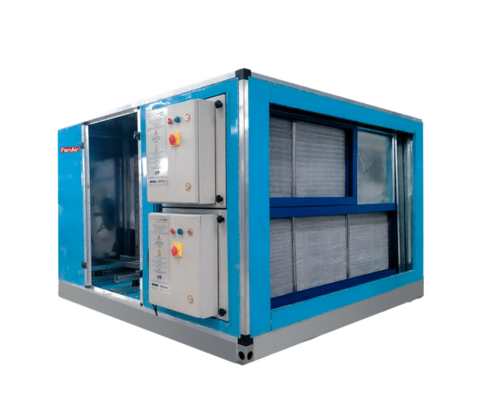
A Dry scrubber is designed to extract harmful gases and particulates from exhaust streams. It is a type of pollution control equipment. Dry scrubber are primarily used to abate acidic gases, like those associated with acid rain. This is one of the most common pieces of equipment found in manufacturing plants, because of its ability to handle high temperature, highly acidic exhaust streams.

Model no.
FAEK-1,2,3,4
Capacity
Upto 12000 CFM (Single Unit)
Max Capacity
Upto 60000 CFM (Multi Unit)
Applications
Asphalt Processing, Pharmaceuticals, Landfills And Biogas, Coaters, Textile Processing, Tar Removal, Curing Ovens, Vinyl Manufacturing, Oil And Gas, Acid Mist Control, Fertilizer Manufacturing, Wastewater Treatment, Steel Processing, Electronics, Food Processing, Cocoa Processing
Wet Scrubber Manufacturers in India

Wet Scrubber

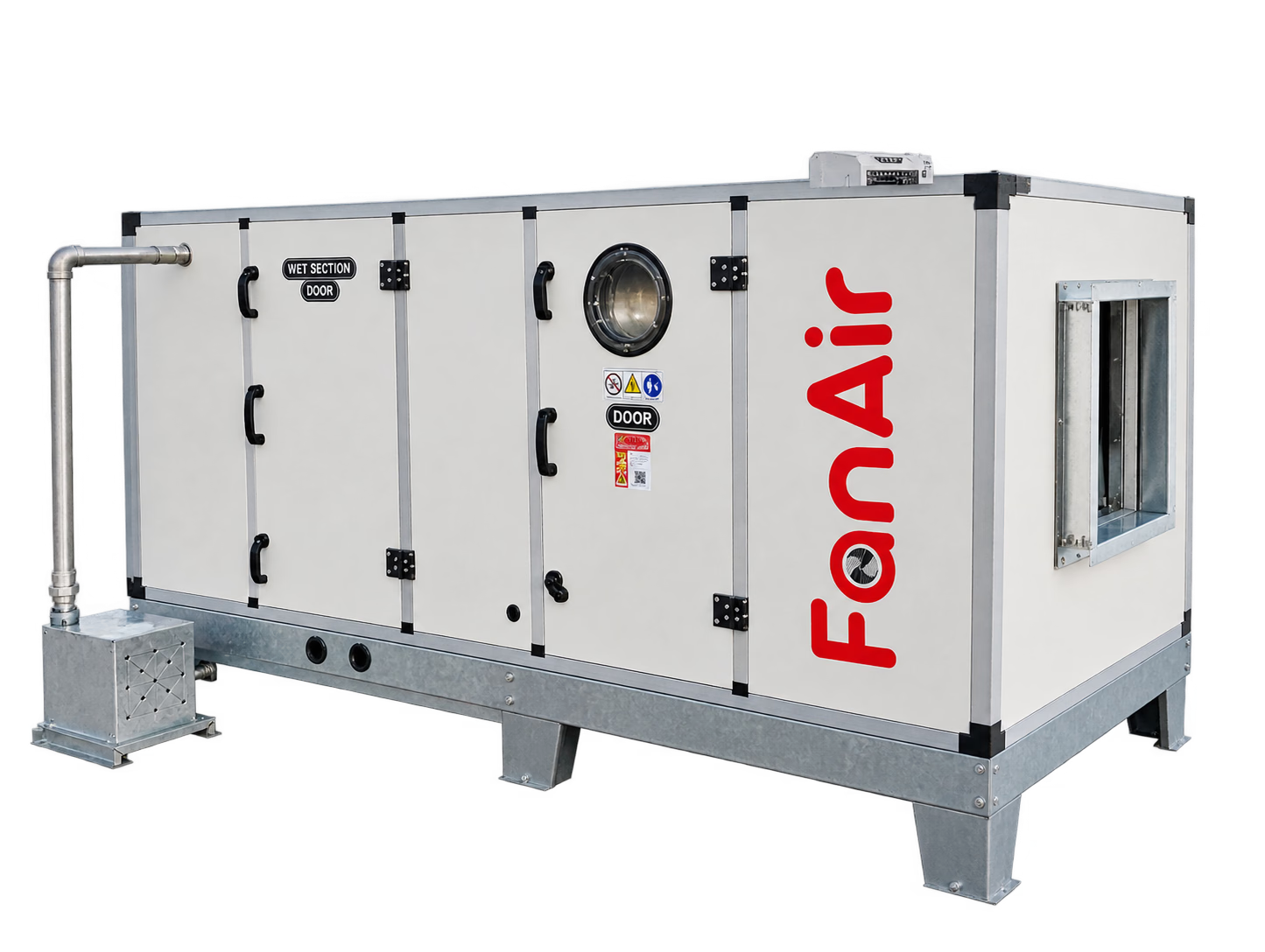
As the name suggest kitchen scrubber is used to scrub fumes from the cooking process. It draws the fumes from the kitchen through the hoods. These fumes will be scrubbed by high water jets due to which all the contaminants such as oil, grease etc. are trapped and clean air will be exhausted to the environment Fanair wet scrubber is highly efficient, very low pressure drop and hence maximum scrubbing efficiency.

Frame
Extruded Aluminium Profile
Base
Heavy Gauge Base Frame With Cast Al Corners
Casing
23+2 Mm Thick, Double Skin Panels Made Of 0.6 Mm Sheets With Poly Urethane Foam (PUF Of Density 38+2 Kg/ Cu. M) Injected Between Two Skins Or Single Skin In 1.6/1.8 Mm Gl Sheet.
Wet Section
Double Bank Gl Spray Header With Brass/PVC Spray Nozzles.
Blowers
DIDW Centrifugal Blowers, Common Rail Base For Blower Motor Assembly On Vibration Isolator Pads
Motors
TEFC Type, Three Phase Motor Of Standard Make.
Motor Stand
Adjustable Motor Mounting Fixture.
Pulleys
Adjustable Taper Bush Pulleys
Pumps
Monoblock Pumps Of Standard Make.
Sump
SS 304/ Gl With FRP Tank With Socket Connections For Water In Overflow And Drain Complete With Y Strainer, Ball Cock Etc.

Types of Scrubbers

Dry Scrubbers

Dry Scrubbers use absorbent materials or chemical reactions to remove certain pollutants from exhaust gases without using water. They can be appropriate for industrial processes where acidic gases, high-temperature exhaust, or specific chemical contaminants need to be controlled.

FanAir lists the FAEK-1, 2, 3, and 4 models, with a capacity of up to 12,000 CFM for a single unit and up to 60,000 CFM for multiple units. Applications listed include pharmaceuticals, textile processing, oil and gas, fertilizer production, metal processing, electronics, and wastewater treatment.

Wet Scrubbers

Wet Scrubbers use a liquid solution to capture or neutralize pollutants from an exhaust stream. In applications such as kitchen exhaust, water spray can help capture contaminants such as oil and grease before the treated air is discharged.

FanAir's wet scrubber configuration includes spray headers with brass/PVC nozzles, centrifugal blowers, TEFC motors, pumps, and a sump arrangement. The construction may be selected according to the application and operating conditions.

Key Features of Dry/Wet Scrubbers

Effective Pollutant Removal

The primary purpose of a scrubber is to treat an exhaust stream before it is released into the surrounding environment. The appropriate technology depends on the pollutant type and exhaust characteristics.

Industrial Scrubbers may be designed around airflow, pollutant concentration, temperature, pressure drop, and system conditions. Selecting the proper configuration helps create a system suited to the specific application rather than using the same arrangement for every process.

Technical Specifications

Scrubber specifications vary according to the type of system and application. Dry scrubber capacity may be selected according to the required exhaust volume, while wet scrubber construction includes components such as spray systems, blowers, pumps, and collection arrangements.

Scrubber TypeDry / Wet
Dry Scrubber ModelFAEK-1, 2, 3, 4
Single Unit CapacityUp to 12,000 CFM
Multi-Unit CapacityUp to 60,000 CFM
Wet SectionSpray Header & Nozzles
BlowersDIDW Centrifugal Blowers
MotorsTEFC Type
PumpMonoblock Pump

Final specifications need to be confirmed according to the chosen model and project requirements.

Applications of Dry/Wet Scrubbers

Industrial Process Applications

Industrial Wet Scrubbers and dry systems can be used across different production and processing environments. Applications listed by FanAir include asphalt processing, pharmaceuticals, textile processing, tar removal, vinyl manufacturing, oil and gas, acid mist control, fertilizer production, metal processing, electronics, and food processing.

The appropriate scrubber depends on the pollutants being handled and the process conditions. Factors such as exhaust temperature, airflow, chemical characteristics, and required treatment level should be evaluated before selection.

Commercial and Kitchen Exhaust

Wet scrubbing systems also can be used for kitchen exhaust applications. Water jets can help capture oil, grease, and other contaminants from cooking fumes before the treated air is discharged.

The complete system can include hoods, ductwork, blowers, pumps, spray sections, and collection components. Proper sizing and installation are critical to achieving desired exhaust performance.

Why Proper Scrubber selection Matters

Choosing Dry/Wet Scrubbers Manufacturers in India requires an understanding of the complete exhaust system. Pollutant type, airflow, temperature, moisture, pressure drop, and available installation space can all affect the final design.

A properly selected system can help integrate the scrubber with the existing process and exhaust arrangement. Engineering support is useful when the application involves unusual pollutants, high temperatures, corrosive gases, or specific space limitations.

Engineering and Manufacturing Process

Application Analysis

The process begins by gathering information about the exhaust source, airflow, pollutant characteristics, operating temperature, and required treatment. This information assists in deciding whether a dry or wet scrubbing method is more suitable.

Fabrication and Assembly

After the design is finalized, the specified components are fabricated and assembled. Depending on the configuration, this may include the scrubber frame, spray section, blower, motor, pump, sump, and related connections.

Customized Scrubber Solutions

Every industrial system has different exhaust conditions. Customized Scrubber Systems can therefore be developed around airflow, pollutant type, temperature, material requirements, available space, and process connections.

Providing complete technical data enables the manufacturer to understand the application and develop a suitable arrangement. Material selection also can be considered where the exhaust contains corrosive or chemically active materials.

How to Select the Right Scrubber

Check Pollutants and Airflow

Start by identifying the pollutants present within the exhaust and the required airflow in CFM. This data provides an important basis for selecting the scrubber type and capacity.

Consider Operating Conditions

Temperature, moisture, chemical characteristics, pressure drop, installation area, maintenance requirements, and operating hours should also be reviewed before the final selection.

Frequently Asked Questions

What are Dry/Wet Scrubbers used for?

They are used to treat exhaust gases, fumes, and certain pollutants generated by commercial and industrial processes.

What is a Dry Scrubber?

A dry scrubber uses absorbent materials or chemical reactions to remove certain pollutants without using water.

What is a Wet Scrubber?

A wet scrubber uses a liquid, generally through spray nozzles, to capture or neutralize pollutants from an exhaust stream.

Can scrubbers be customized?

Yes. Scrubber type, capacity, materials, blower, pump, spray arrangement, and other components can be selected according to project requirements.

Conclusion

Selecting suitable Dry/Wet Scrubbers Manufacturers in India calls for careful consideration of pollutants, airflow, temperature, pressure drop, and process conditions. The proper system can support effective exhaust treatment and integration with commercial or industrial operations.

For technical consultation and project requirements, FanAir India Pvt. Ltd. can discuss your application and help select an appropriate scrubber configuration for your air pollution control needs.

Contact Us