+91-9811347199 saurabh.joshi@fanair.in
/// ESTD 2016

Dry/Wet Scrubbers in Assam

Scrubbers Manufacturers in Assam

Effective Pollution Control for Industrial Exhaust Systems

Dry and wet scrubbers are pollution-control systems designed to remove harmful gases, particulates, fumes, and other contaminants from exhaust air. They are used across industrial and commercial applications where exhaust treatment and controlled air quality are vital.

As Dry/Wet Scrubbers Manufacturers in Assam, we offer dry and wet scrubber solutions designed for different exhaust treatment requirements. The systems may be selected according to the type of pollutant, airflow, static pressure, application, operating temperature, and site conditions.

Contact Us


Dry Scrubber Manufacturers in Rajasthan

Dry Scrubber

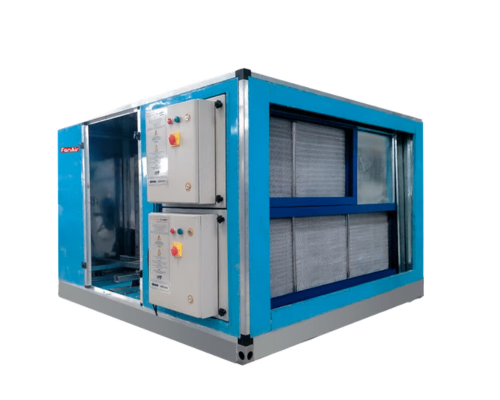
A Dry scrubber is designed to extract harmful gases and particulates from exhaust streams. It is a type of pollution control equipment. Dry scrubber are primarily used to abate acidic gases, like those associated with acid rain. This is one of the most common pieces of equipment found in manufacturing plants, because of its ability to handle high temperature, highly acidic exhaust streams.

Model no.
FAEK-1,2,3,4
Capacity
Upto 12000 CFM (Single Unit)
Max Capacity
Upto 60000 CFM (Multi Unit)
Applications
Asphalt Processing, Pharmaceuticals, Landfills And Biogas, Coaters, Textile Processing, Tar Removal, Curing Ovens, Vinyl Manufacturing, Oil And Gas, Acid Mist Control, Fertilizer Manufacturing, Wastewater Treatment, Steel Processing, Electronics, Food Processing, Cocoa Processing
Wet Scrubber Manufacturers in Rajasthan

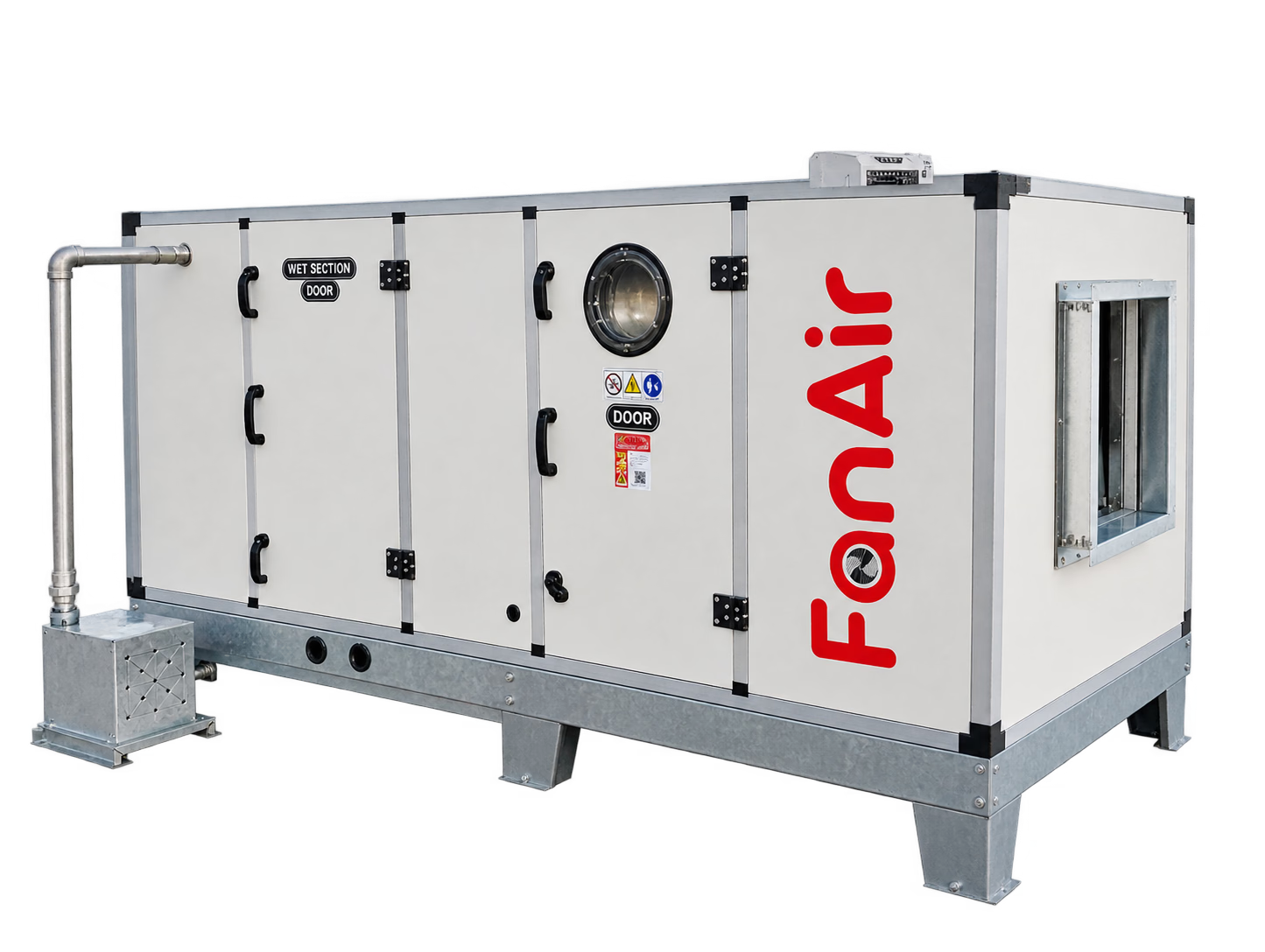
Wet Scrubber

As the name suggest kitchen scrubber is used to scrub fumes from the cooking process. It draws the fumes from the kitchen through the hoods. These fumes will be scrubbed by high water jets due to which all the contaminants such as oil, grease etc. are trapped and clean air will be exhausted to the environment Fanair wet scrubber is highly efficient, very low pressure drop and hence maximum scrubbing efficiency.

Frame
Extruded Aluminium Profile
Base
Heavy Gauge Base Frame With Cast Al Corners
Casing
23+2 Mm Thick, Double Skin Panels Made Of 0.6 Mm Sheets With Poly Urethane Foam (PUF Of Density 38+2 Kg/ Cu. M) Injected Between Two Skins Or Single Skin In 1.6/1.8 Mm Gl Sheet.
Wet Section
Double Bank Gl Spray Header With Brass/PVC Spray Nozzles.
Blowers
DIDW Centrifugal Blowers, Common Rail Base For Blower Motor Assembly On Vibration Isolator Pads
Motors
TEFC Type, Three Phase Motor Of Standard Make.
Motor Stand
Adjustable Motor Mounting Fixture.
Pulleys
Adjustable Taper Bush Pulleys
Pumps
Monoblock Pumps Of Standard Make.
Sump
SS 304/ Gl With FRP Tank With Socket Connections For Water In Overflow And Drain Complete With Y Strainer, Ball Cock Etc.

What Are Dry and Wet Scrubbers?

Scrubbers are air-pollution control systems used to remove unwanted pollutants from exhaust streams before the treated air is discharged. The two primary approaches are dry scrubbing and wet scrubbing.

Dry Scrubbers use absorbent materials or chemical reactions to remove pollutants without using water. They are especially useful for acidic gases, high-temperature exhaust, and industrial emission-control applications.

Wet Scrubbers use liquid solutions or water sprays to capture and neutralize pollution. They may be used for fumes, grease, oil, and other contaminants depending on the application.

Dry Scrubbers

Dry scrubbers are designed to extract harmful gases and particulates from exhaust streams. They are normally used for controlling acidic gases and can handle high-temperature and highly acidic exhaust conditions.

The Assam range includes FAEK-1, FAEK-2, FAEK-3, and FAEK-4 models. A single unit can handle capacity up to 12,000 CFM, while multiple systems can offer maximum capacity up to 60,000 CFM.

Dry scrubbers may be selected for different industrial processes depending on the type of pollutant and required exhaust treatment.

Wet Scrubbers

Wet scrubbers use liquid sprays to capture contaminants from exhaust air. In kitchen applications, fumes are drawn through hoods and passed through high-pressure water jets, which trap contaminants such as oil and grease before cleaner air is exhausted.

The FanAir wet scrubber is designed for high scrubbing efficiency with very low pressure drop. Its construction includes an aluminium profile frame, heavy-gauge base, double-skin or single-skin casing, spray headers, centrifugal blowers, motors, pumps, and a sump arrangement.

Wet Scrubber Construction

The wet scrubber construction includes various components designed for reliable operation:

  • Frame: Extruded aluminium profile
  • Base: Heavy-gauge base frame with cast aluminium corners
  • Casing: 23+2 mm double-skin panels using 0.6 mm sheets with PUF insulation, or 1.6/1.8 mm GI single-skin construction
  • Wet Section: Double-bank GI spray header with brass/PVC spray nozzles
  • Blowers: DIDW centrifugal blowers
  • Motors: TEFC three-phase motors
  • Motor Stand: Adjustable motor mounting fixture
  • Pulleys: Adjustable taper bush pulleys
  • Pumps: Standard monoblock pumps
  • Sump: SS304/GI with FRP tank and water overflow/drain connections

These components are configured according to the requirements of the wet scrubbing application.

Key Features of Dry/Wet Scrubbers

The main features of the scrubber range include:

  • Industrial pollution control
  • Dry and wet scrubbing configurations
  • Removal of gases and particulates
  • Suitable for acidic gas treatment
  • High-temperature exhaust handling for dry scrubbers
  • High scrubbing performance in wet systems
  • Low pressure drop in wet scrubber applications
  • Multiple dry scrubber models
  • Single and multi-unit capacity options
  • DIDW centrifugal blowers in wet scrubbers
  • TEFC 3-phase motors
  • Corrosion-resistant material options for selected components

The final scrubber configuration should be selected according to the pollutant type, airflow, pressure, temperature, and application.

Technical Specifications

Dry Scrubber

ProductDry Scrubber
ModelsFAEK-1, FAEK-2, FAEK-3, FAEK-4
Single Unit CapacityUp to 12,000 CFM
Multi-Unit CapacityUp to 60,000 CFM
Main FunctionGas & Particulate Removal
Suitable ForAcidic & High-Temperature Exhaust

Wet Scrubber

ProductWet Scrubber
FrameExtruded Aluminium Profile
BaseHeavy-Gauge Base Frame
CasingDouble Skin / Single Skin GI
InsulationPUF, 38+2 kg/cu. m density
Wet SectionDouble Bank GI Spray Header
Spray NozzlesBrass / PVC
BlowersDIDW Centrifugal Blowers
MotorsTEFC, Three Phase
PumpsMonoblock Pumps
SumpSS304/GI with FRP Tank

These specifications are based on the current Assam scrubber product page. Final sizing and configuration should be determined from the actual airflow, static pressure, pollutant characteristics, and application requirements.

Applications of Dry/Wet Scrubbers

Pharmaceutical Industries

Pharmaceutical manufacturing processes can also generate fumes, gases, and particulates that require controlled exhaust treatment. Scrubbers may be selected according to the characteristics of the exhaust stream.

Chemical and Process Industries

Chemical and process plants can produce acidic gases and other contaminants. Dry or wet scrubbing systems may be selected according to the pollutant and process conditions.

Textile Processing

Textile processing applications can require exhaust treatment for process-related emissions. Scrubber selection depends on the type and concentration of contaminants.

Oil and Gas

Oil and gas facilities may require specialised exhaust treatment for different process emissions. Proper system sizing is important for effective pollutant control.

Food Processing

Food-processing facilities can use wet scrubbers for selected fumes, grease, and process exhaust applications.

Kitchen Exhaust

Wet scrubbers can capture oil and grease from cooking fumes using water spray systems before the treated air is discharged.

The current Assam page lists applications such as pharmaceuticals, textile processing, oil and gas, fertilizer manufacturing, wastewater treatment, metal processing, electronics, food processing, cocoa processing, asphalt processing, and kitchen/process exhaust treatment.

Benefits of Dry/Wet Scrubbers

Properly selected scrubbers can provide several practical benefits:

  • Pollutant removal from industrial exhaust streams
  • Suitable for acidic gas treatment
  • Dry systems can operate without water
  • Wet systems can capture liquid-soluble contaminants
  • Suitable for high-temperature exhaust applications
  • Different capacity options
  • Low pressure drop in suitable wet scrubber applications
  • Suitable for commercial and industrial exhaust treatment
  • Multiple application possibilities
  • Can be designed according to project-specific requirements

Actual pollution-control performance depends on pollutant characteristics, concentration, airflow, temperature, chemical properties, scrubber configuration, and operating conditions.

Dry/Wet Scrubbers Suppliers in Assam

As Dry/Wet Scrubbers Suppliers in Assam, we offer scrubber solutions for chemical, pharmaceutical, process, kitchen, and other exhaust treatment applications. The equipment may be selected according to airflow, static pressure, pollutant type, and site conditions.

Assam has a diverse industrial environment, including tea processing units across the Brahmaputra Valley, refineries, oil and gas installations, cement and food-processing facilities, hospitals, and commercial buildings. Heavy monsoon conditions and high humidity can also make corrosion-resistant construction and reliable ventilation critical considerations for many projects.

For Assam projects, an appropriate dry or wet scrubber configuration should be selected according to the exhaust characteristics and required treatment process.

Dry/Wet Scrubber Manufacturer in India

The scrubbers supplied for Assam projects are manufactured at the FanAir facility in Neemrana, Rajasthan. Each unit is selected according to the required airflow, static pressure, application, and site conditions.

Technical data and sizing support may be supplied before ordering. Finished equipment may be dispatched to project locations across Assam and other parts of India.

How to Choose the Right Scrubber

Selecting the right scrubber requires understanding the entire exhaust-treatment requirement.

  • Identify the pollutant: Determine whether the exhaust carries gases, particulates, oil, grease, fumes, or other contaminants.
  • Select the scrubber type: Choose a dry or wet configuration according to the pollutant and treatment process.
  • Airflow: Determine the required CFM or airflow volume.
  • Static pressure: Consider ductwork and other system resistance.
  • Temperature: Check the operating temperature of the exhaust stream.
  • Pollutant concentration: Consider the quantity and characteristics of contaminants.
  • Material: Select suitable construction materials according to the operating environment.
  • Capacity: Select single or multiple units according to the specified airflow.
  • Site conditions: Consider humidity, corrosion, installation area, and maintenance access.

Providing accurate exhaust and process information helps in selecting a suitable pollution-control system.

FAQs

What is a dry scrubber?

A dry scrubber is pollution-control equipment that eliminates harmful gases and particulates from exhaust streams using absorbent materials or chemical reactions without using water.

What is a wet scrubber?

A wet scrubber uses liquid sprays or solutions to capture and neutralize pollution from an exhaust stream. It can also be used for kitchen fumes containing contaminants such as oil and grease.

What is the capacity of the dry scrubber?

The listed dry scrubber capacity is up to 12,000 CFM for a single unit and up to 60,000 CFM using multiple units.

What models are available for dry scrubbers?

The current range includes FAEK-1, FAEK-2, FAEK-3, and FAEK-4 models.

Where are dry and wet scrubbers used?

They are used across pharmaceutical, chemical, textile, oil and gas, fertilizer, wastewater treatment, metal, electronics, food-processing, kitchen exhaust, and other industrial applications.

Conclusion

Dry and wet scrubbers provide vital solutions for controlling pollutants in commercial and industrial exhaust systems. Dry scrubbers are appropriate for applications involving gases and particulates, such as acidic and high-temperature exhaust, while wet scrubbers use liquid sprays to capture and neutralize suitable contaminants.

FanAir India Pvt. Ltd. manufactures dry and wet scrubbers at its Neemrana facility and supplies them to Assam and other locations throughout India. Proper selection based on pollutant type, airflow, static pressure, temperature, application, and site conditions can help achieve an effective exhaust-treatment system.

Contact Us

Serving Assam

Fan Air India Pvt. Ltd. manufactures dry and wet scrubbers that remove pollutants from exhaust gases. For customers in Assam, our Dry & Wet Scrubbers are commonly used for chemical, pharmaceutical, process and kitchen exhaust treatment.

Assam's industry ranges from tea processing units across the Brahmaputra valley to refineries, oil and gas installations, cement, food processing and a growing number of hospitals and commercial buildings in Guwahati. The state's heavy monsoon and high humidity make corrosion-resistant construction and dependable ventilation especially important.

Every unit is built at our factory in Neemrana, Rajasthan and selected to suit the required airflow, static pressure and site conditions of your project. Our team can help with sizing and technical data before you order, and we dispatch finished equipment to sites across Assam and the rest of India.

To get a quotation for Dry & Wet Scrubbers in Assam, share your airflow, pressure and application details through our contact page, call +91-9811347199 or email saurabh.joshi@fanair.in.

Other Fan Air products in Assam

Dry & Wet Scrubbers in other locations